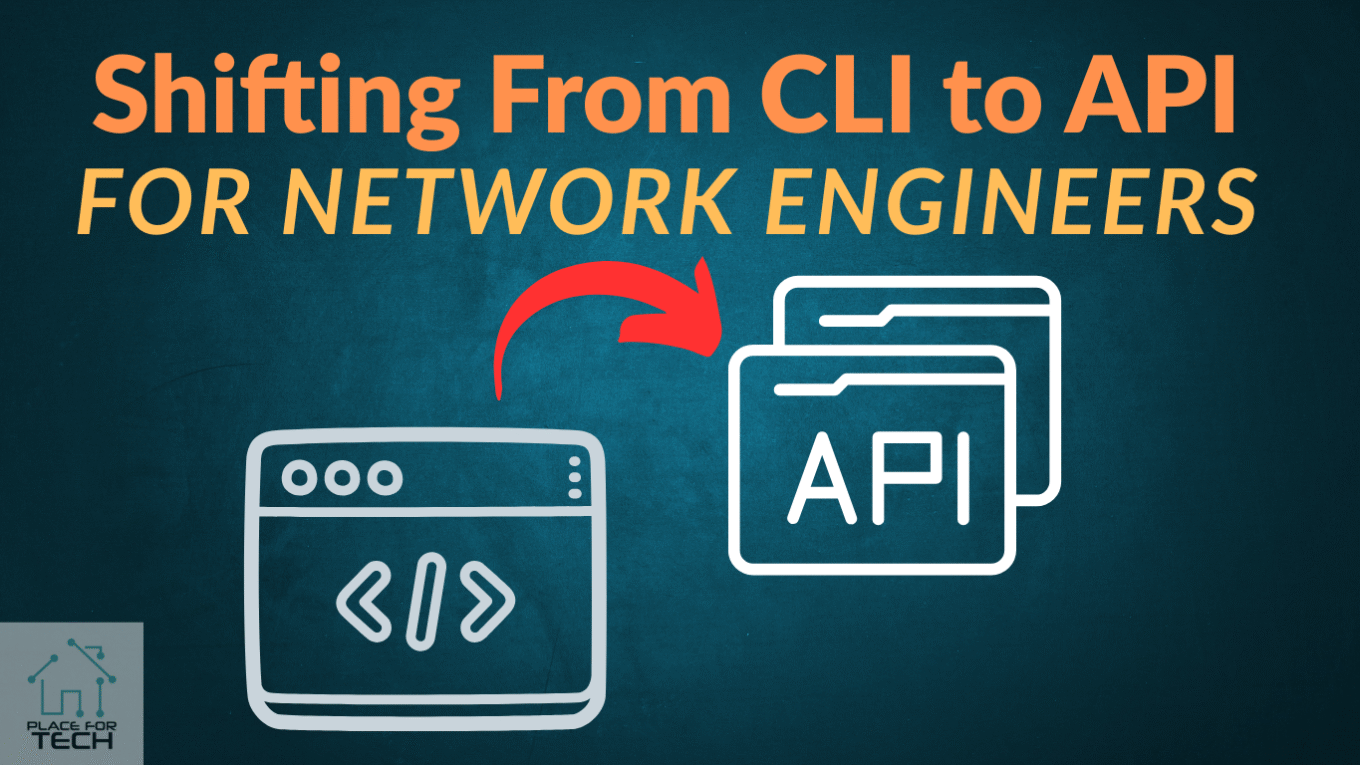
The CLI is Gathering Dust: Why the Future of Network Engineering is in APIs
The End of an Era: Trading the CLI for the API
For decades, the image of a network engineer was inseparable from a terminal window filled with glowing text. The Command Line Interface (CLI) was our kingdom, the console cable our scepter. We built empires of connectivity, one painstaking command at a time. But the ground is shifting. The scale, speed, and complexity of modern networks demand a new approach. The future of network engineering isn’t typed; it’s coded. It’s a fundamental shift from the CLI to the API.
The CLI: Our Powerful, Yet Limited, Foundation
Let’s be clear: the CLI is not dead, nor is it useless. It remains an invaluable tool for direct troubleshooting, deep-dive diagnostics, and initial device setup. Mastering the CLI has been a rite of passage, teaching us the intricate logic of network protocols and device architecture. It provides a direct, unfiltered conversation with the hardware.
However, its limitations become glaringly obvious in the age of the cloud and hyper-scale data centers:
- Scalability: Configuring ten switches via CLI is tedious. Configuring a thousand is an operational nightmare, prone to human error.
- Speed: Manually provisioning network services is a bottleneck. In a world of agile development and DevOps, waiting days for a network change is unacceptable.
- Consistency: Different engineers may implement the same request in slightly different ways, leading to configuration drift and future troubleshooting headaches.
- Integration: The CLI is a human-centric interface. It doesn’t easily integrate with other IT systems like monitoring dashboards, ticketing systems, or automated workflows.
Imagine needing to add a new VLAN to 50 switches in a campus network. The manual CLI process is repetitive, slow, and carries a high risk of typos.
# Connecting to Switch 1...
configure terminal
vlan 205
name Marketing_Prod
exit

# Connecting to Switch 2...
configure terminal
vlan 205
name Marketing_Prod
exit

# ...and so on, 48 more times.
Enter the API: The Network as Code
An Application Programming Interface (API) is essentially a contract that allows different software applications to communicate with each other. In modern networking, the network device itself becomes an application that we can programmatically control. Instead of typing human-readable commands, we send structured data (like JSON) to an API endpoint on the device.
This simple concept unlocks a world of possibilities:
Automation at Scale
With an API, you write a script once and use it to configure thousands of devices identically. The same task of adding a VLAN to 50 switches becomes a simple script. This isn’t just about saving time; it’s about building reliable, predictable, and scalable networks.
Powerful Integration (NetDevOps)
APIs are the glue of modern IT. A network API can be integrated with a CI/CD pipeline, allowing developers to request network resources as part of their application deployment. It can connect to a monitoring system to automatically remediate issues, or to a security platform to instantly quarantine a compromised device. This breaks down the silo between network teams and other IT functions, paving the way for a true NetDevOps culture.
Data-Driven Insights
APIs aren’t just for pushing configuration; they’re for pulling data. You can programmatically gather telemetry, statistics, and state information from across your entire network, feed it into analytics platforms, and gain unprecedented visibility into network health and performance.
Let’s revisit our VLAN task, but this time with a simple Python script using the `requests` library to talk to a hypothetical REST API on the switches.
import requests
import json

# List of switches to configure
switches = ["192.168.1.10", "192.168.1.11", "...", "192.168.1.59"]

# Data for the new VLAN (structured and consistent)
vlan_data = {
    "vlan_id": 205,
    "name": "Marketing_Prod"
}

headers = {
    'Content-Type': 'application/json',
    'Authorization': 'Bearer YOUR_API_TOKEN'
}

# Loop through every switch and send the same configuration
for switch_ip in switches:
    url = f"https://{switch_ip}/api/v1/vlans"
    try:
        response = requests.post(url, headers=headers, data=json.dumps(vlan_data), verify=False)
        response.raise_for_status() # Raises an error for bad responses (4xx or 5xx)
        print(f"Successfully configured VLAN on {switch_ip}")
    except requests.exceptions.RequestException as e:
        print(f"Failed to configure VLAN on {switch_ip}: {e}")
The difference is night and day. This is repeatable, documented (the code itself is documentation), and infinitely more scalable.
The Skillset for the Modern Network Engineer
This evolution doesn’t mean your networking fundamentals are obsolete. In fact, they’re more important than ever. You can’t automate what you don’t understand. A deep knowledge of TCP/IP, BGP, OSPF, and VXLAN is the non-negotiable foundation. The shift is about augmenting that foundation with a new layer of skills:
- Programming/Scripting: Python has become the de facto language for network automation due to its simplicity and extensive libraries.
- API Literacy: You need to understand how to read API documentation and work with REST APIs, understanding concepts like HTTP methods (GET, POST, PUT, DELETE), headers, and status codes.
- Data Formats: Proficiency with JSON and YAML is essential, as this is how data is structured for API calls and configuration management tools.
- Automation Frameworks: Tools like Ansible (for configuration management) and Terraform (for infrastructure as code) are mainstays of the modern toolkit.
- Version Control: Using Git to manage configurations as code allows for change tracking, collaboration, and easy rollbacks—practices borrowed from software development.
An Evolution, Not a Replacement
The role of the network engineer is becoming more strategic. We are moving away from being device operators to becoming network architects and automation developers. The future is about designing, building, and maintaining self-healing, automated, and programmable networks that are a core, integrated part of the business’s technology engine.
This is not a threat; it’s the most exciting opportunity our field has seen in decades. So, while you shouldn’t throw your console cable away just yet, it’s definitely time to start spending more quality time with your code editor. The future is waiting.